If Your Vet Can't Explain Why Your Cat Is Overgrooming, Read This
4 Reasons Your Cat Can't Stop Licking, And Why Everything You've Tried Has Failed
(The answer might not be behavioral at all.)
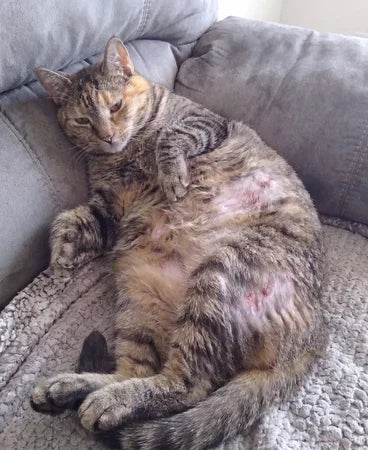
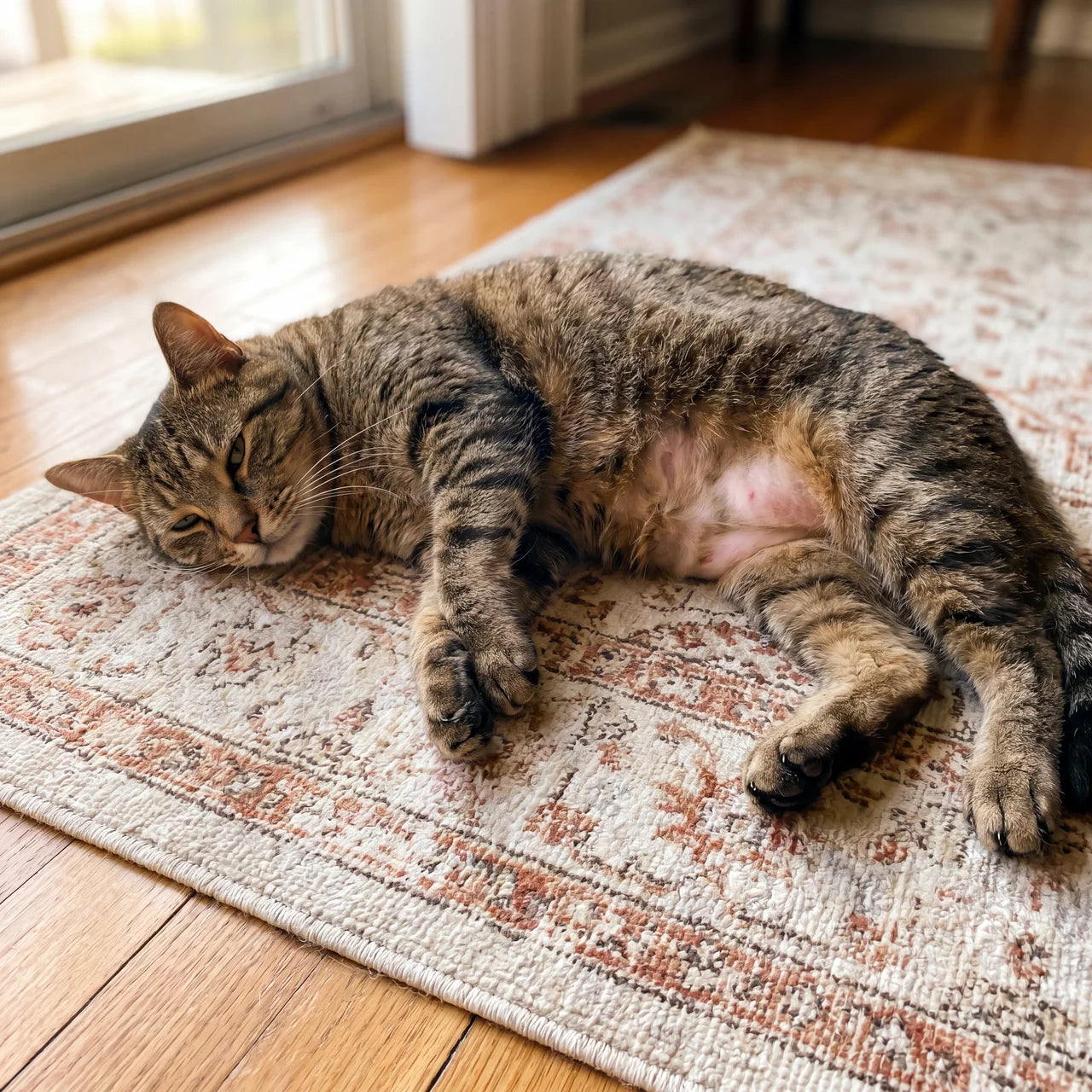
Sarah had been here four times in eight months. Same story every time. Luna, her three-year-old tabby, had been licking herself raw. Bald patches on her belly. Thinning fur along her legs. Sometimes she licked until she bled.
"We've run the allergy panels," Dr. Chen said, flipping through the chart. "No environmental triggers. No food sensitivities. No parasites."
"So what is it?" Sarah asked. He looked up from the chart. "It's behavioral. She's anxious. You could try putting her on fluoxetine."
Sarah drove home with a prescription she wasn't going to fill and a $380 bill she was.
She had heard the word 'behavioral' so many times it had started to feel like a medical term for 'we don't know.' She had tried the Feliway diffusers. The calming collar. The anxiety treats. An elimination diet that cost more per week than her own groceries. Luna had worn a surgical onesie for six weeks straight to stop the licking — which worked, briefly, the way a bandage works on an infection.
The onesie came off. Luna went straight back to licking.
"It's like she can't get out of her own skin," Sarah wrote on Reddit at 1am, desperate enough to type her fears into a forum. "I feel completely helpless."
She wasn't alone. Hundreds of replies. Thousands of cat owners describing the same thing. The same vet visits. The same dismissals. The same stack of failed solutions. And then, buried in the thread, someone posted a link to a study. Not a supplement ad. Not a blog post. A paper from the Purina Institute.
"She Isn't Anxious," the Researcher Said. "Her Gut Has Forgotten How to Make Calm."
The paper was dense, written for veterinary researchers, not cat moms, but the conclusion was impossible to misread.
Specific bacteria in the feline gut produce GABA — gamma-aminobutyric acid, the brain's primary calming neurotransmitter. The chemical that tells a stressed nervous system: stand down, you're safe, you can stop now.
When those bacteria are depleted, GABA production drops. The brain loses its primary tool for self-regulation. Stress that would normally resolve keeps escalating. The nervous system gets stuck in a loop it can't exit on its own. And the body, desperate for relief, finds the only outlet it has. It grooms. Compulsively. Obsessively. Until the fur is gone.
"She isn't broken," the study's logic implied. "Her gut is."
The gut is sometimes called the 'second brain,' and for good reason. It contains more neurons than the spinal cord and produces the vast majority of the body's serotonin. In cats, the gut-brain axis is just as active as it is in humans. When the gut is disrupted, the brain pays the price.
But how does a cat's gut get disrupted in the first place?
The 60-Year Mistake Nobody Talks About
For 10,000 years, cats ate what they evolved to eat. Small prey. High protein. Almost zero carbohydrates. Then, in the 1960s, the pet food industry introduced commercial kibble. Convenient. Affordable. Shelf-stable. And loaded with 25 to 40% carbohydrates that cats were never designed to process.
The feline microbiome — the ecosystem of bacteria that governs digestion, immunity, and neurological calm — had no evolutionary preparation for this shift. Within a generation, the gut bacteria that cats had carried for millennia began to collapse.
Why Nothing You've Tried Has Worked
Understanding the Microbiome-GABA Pathway explains something that has probably frustrated you for a long time: every solution you've been given has treated the licking. None of them have touched the cause.
Feliway diffusers release synthetic pheromones. They signal 'safety' to the nervous system but do nothing for the depleted gut bacteria producing the GABA shortage in the first place.
Anti-anxiety medication (fluoxetine, gabapentin) suppresses the nervous system's response — again treating downstream symptoms while the gut-brain pathway remains broken.
Generic probiotics like FortiFlora contain a single strain, Enterococcus faecium, selected specifically for stool consistency in cats with diarrhea. It does not target GABA-producing bacteria. It does not address the gut-brain axis. It solves a different problem entirely.
Elimination diets remove potential allergens but don't restore the microbiome that years of processed food have depleted.
None of these are bad products. They're just answers to the wrong question. The right question isn't how do I stop the licking? It's: why can't my cat's nervous system calm itself down?
Introducing Biopurr: The First Cat Probiotic Formulated for the Gut-Brain Pathway
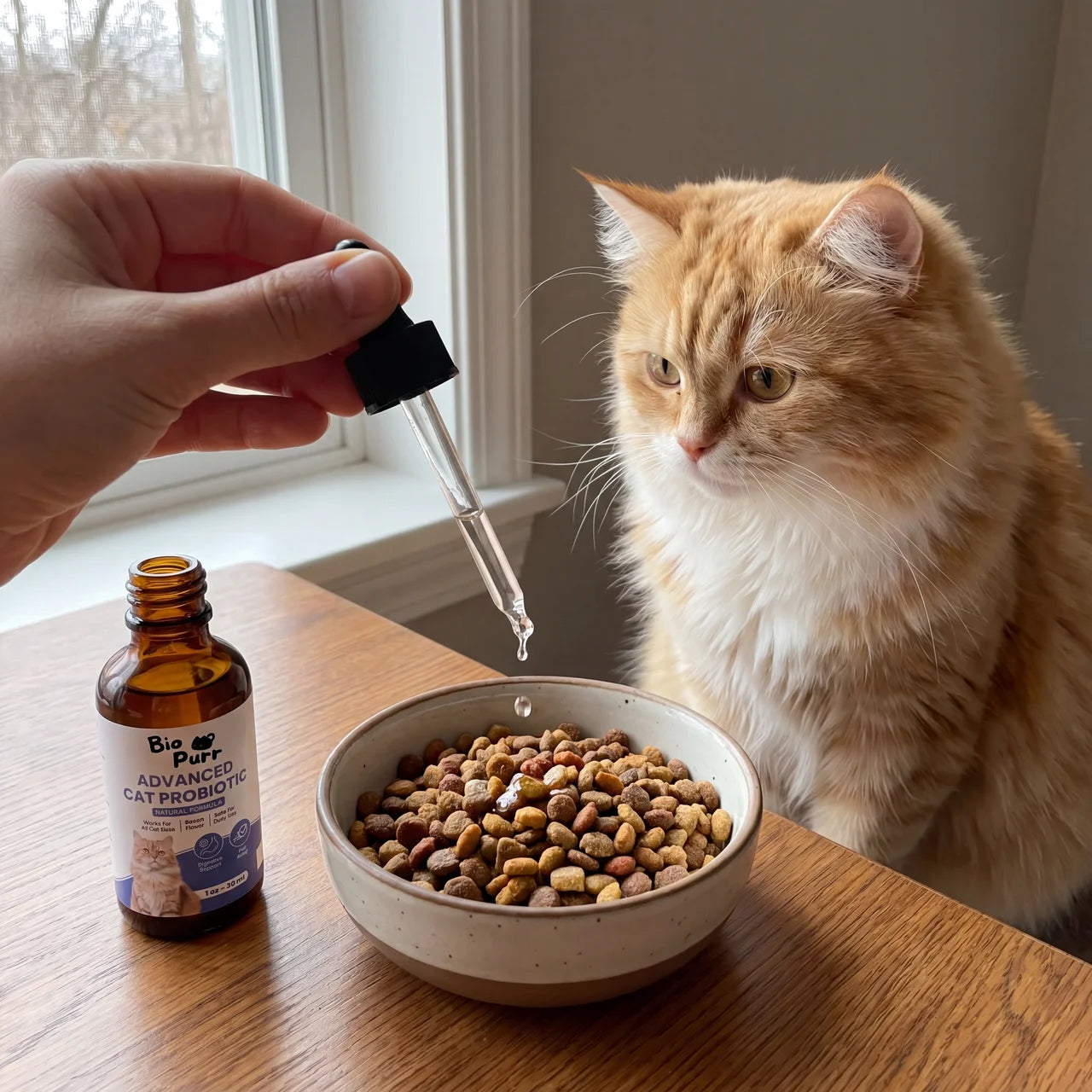
A 7-strain liquid probiotic specifically selected to restore the Microbiome-GABA Pathway — the biological chain that connects gut health to brain calm to behavioral regulation in cats. Here are the 4 ways Biopurr addresses what's actually driving your cat's overgrooming:
1. Repopulates the GABA-Producing Bacteria Your Cat's Gut Has Lost
Most cat owners who try a probiotic for overgrooming try FortiFlora. It doesn't work for this — not because probiotics don't work, but because it contains the wrong strain for the wrong problem. FortiFlora's single strain (Enterococcus faecium) was selected to firm loose stools. It has no documented role in the gut-brain axis or GABA production.
Biopurr's formula includes Bifidobacterium longum and Lactobacillus acidophilus, two of the most studied strains in gut-brain axis research. Bifidobacterium longum has been studied for its role in the gut brain axis, including effects on GABA signaling in animal research. Lactobacillus acidophilus plays a documented role in serotonin pathway support and gut lining integrity. Bifidobacterium breve and Lactobacillus casei provide additional ecosystem diversity, because a resilient microbiome isn't built on one strain.
The formula delivers all seven strains in a liquid drop format, bypassing the heat degradation and tablet binders that destroy live bacteria in powder and chew-based probiotics before they ever reach the gut.
"I had tried FortiFlora for months with no change in the licking. Within three weeks of switching to Biopurr, the bald patch on Luna's belly had visible regrowth. I genuinely cried."
— Sarah M., verified customer"Vet had my cat on fluoxetine for six months. I didn't want her on it forever. Biopurr was the first thing that actually reduced the licking without medication."
— Karen T., verified customer2. Feeds and Protects the New Bacteria With a Built-In Prebiotic
Introducing good bacteria into a depleted gut is only half the equation. If the environment isn't right, the new bacteria don't survive long enough to make a difference. This is why most probiotics produce inconsistent results — they deliver the bacteria but don't change the conditions that killed off the original population.
Biopurr includes Inulin, a prebiotic fiber that acts as food for the probiotic strains, helping them establish and colonize rather than pass through. Inulin selectively feeds beneficial bacteria while starving pathogenic strains that compete for gut territory. It supports the production of short-chain fatty acids that reinforce the gut lining, reducing the leaky-gut permeability that allows inflammatory signals to reach the brain.
"My cat had recurring skin infections from the overgrooming. Since starting Biopurr, no new infections and the existing irritation has cleared up significantly."
— Donna K., verified customer"I didn't expect the immune support angle — I just wanted the licking to stop. But her coat looks healthier overall, her eyes are brighter. She just seems better."
— Amy S., verified customer3. Supports the Immune System That Stress Has Been Quietly Destroying
There's a detail most cat owners don't know: chronic stress doesn't just affect behavior — it suppresses immunity. A cat locked in a cycle of stress-induced overgrooming is a cat whose immune system is running below capacity, making them more vulnerable to secondary infections, skin inflammation, and the kind of systemic low-grade inflammation that makes gut restoration harder.
Biopurr includes Astragalus membranaceus root extract, an adaptogenic herb with centuries of use in traditional medicine and a growing body of modern research behind it. Astragalus has been shown to support immune function by increasing the activity of T-cells and natural killer cells, and has anti-inflammatory properties that help reduce the systemic inflammation that perpetuates the stress-overgrooming cycle.
"I noticed my cat's digestion improved within the first week — softer stools, less gas, much calmer after eating. The overgrooming started reducing in week three."
— Jennifer L., verified customer"She used to pace after meals. That stopped almost immediately. The licking took longer but it's noticeably less now at week five."
— Michelle R., verified customer4. Soothes the Gut Inflammation That Keeps the Stress Signal Firing
The gut-brain axis is a two-way highway. Stress signals travel from the brain to the gut, and gut signals travel back to the brain. In a cat with a disrupted microbiome, the gut is sending a constant stream of inflammatory signals upward. The brain interprets those signals as threat. The nervous system stays on high alert. The overgrooming continues. Breaking the cycle requires calming the gut, not just repopulating it.
Biopurr includes Yucca schidigera extract and a digestive enzyme complex (Bromelain and Papain) that work together to reduce gut inflammation and improve nutrient absorption. Yucca has documented anti-inflammatory effects in the gastrointestinal tract. Bromelain and Papain are plant-derived enzymes that break down proteins more completely, reducing the fermentation that feeds pathogenic bacteria and produces gas and discomfort.
"The change in my cat's digestion was almost immediate. Less bloating, less gas, and within a couple of weeks she was noticeably less agitated. The licking has reduced significantly."
— Lisa B., verified customer"I could tell the gut inflammation was an issue — she'd vocalize after eating sometimes. That stopped in the first week. The behavioral stuff followed."
— Rachel W., verified customerWarning Signs Your Cat's Gut-Brain Pathway Is Getting Worse
- 🚨 Licking the same spot repeatedly, even after it's raw or scabbed
- 🚨 Bald patches that aren't growing back between grooming sessions
- 🚨 Licking that intensifies after meals — a sign of gut inflammation
- 🚨 Overgrooming that gets worse with any new stressor (visitors, schedule changes, loud noise)
- 🚨 Multiple failed treatments with the same result: temporary improvement, then back to baseline
Your Cat's 8-Week Restoration Timeline
The probiotic strains begin colonizing the gut. Digestion improves noticeably — less gas, softer stools, calmer after meals. Some cats show early reductions in licking frequency.
GABA-producing bacteria begin establishing dominance. The brain starts receiving calmer signals from the gut. Licking frequency and duration begins to measurably reduce. Bald patches may show early signs of regrowth.
The new microbiome is reinforced by Inulin. Stress responses become less intense. Overgrooming that was previously triggered by minor stressors may no longer occur. Skin inflammation begins to heal.
A rebuilt gut-brain pathway means the nervous system has regained its ability to self-regulate. Many cats show a noticeable reduction in overgrooming, and fur regrowth is often visible. Owners frequently describe their cat as 'finally themselves again.'
Results vary. We recommend at least 60 days of consistent daily use for full gut-brain pathway restoration. Some cats show earlier improvement.
What Most Cat Probiotics Get Wrong vs. What Biopurr Does Right
Most cat probiotics
- ✗ Single strain (Enterococcus faecium), selected for stool firmness, not brain calm
- ✗ Powder or chew format — heat degradation and binders destroy live bacteria
- ✗ No prebiotic support — bacteria are introduced but don't survive
- ✗ No gut-brain axis targeting — the mechanism of overgrooming goes unaddressed
- ✗ No anti-inflammatory support — the stress signal cycle keeps firing
Biopurr
- ✓ 7 strains including Bifidobacterium longum and Lactobacillus acidophilus, researched for gut-brain axis support
- ✓ Liquid drop format — maximum bioavailability, no degradation, no palatability rejection
- ✓ Inulin prebiotic included — feeds and establishes the bacteria so they actually colonize
- ✓ Astragalus immune support — addresses the stress-immunity cascade alongside the microbiome
- ✓ Yucca + digestive enzymes — reduces gut inflammation that drives stress signaling
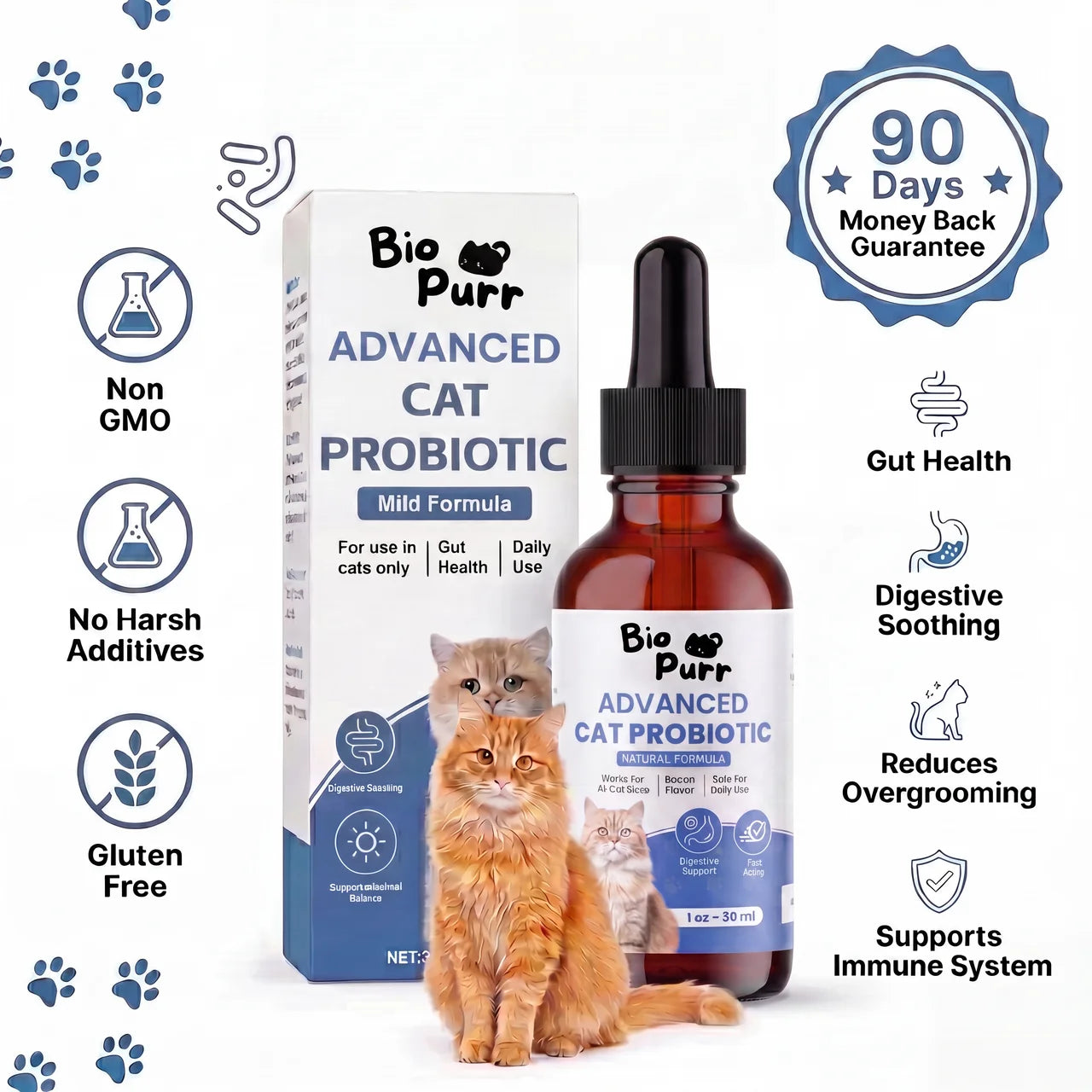
Try Biopurr risk-free for 90 days. If your cat's overgrooming doesn't improve, contact us for a full refund — no questions, no hoops, no hassle.
Try Biopurr Risk-Free for 90 Days
If your cat's overgrooming doesn't improve, you pay nothing.
 Check Availability
90-Day Money-Back Guarantee
Every Biopurr order includes:
- ✓ 7-strain probiotic formula including Bifidobacterium longum and Lactobacillus acidophilus
- ✓ Inulin prebiotic for colonization support
- ✓ Astragalus extract for immune resilience
- ✓ Yucca extract and digestive enzymes for gut inflammation reduction
- ✓ Liquid dropper — mix directly into food, no rejection
- ✓ No fillers, artificial additives, or ingredients your cat doesn't need
Your Cat Isn't Broken. Their Gut Might Be. Here's Where to Start.
Sarah filled the dropper the first night and added six drops to Luna's food without any fanfare. Luna ate it without hesitation. By day ten, she had noticed Luna grooming her belly less. Not dramatically, but measurably. By week four, the bald patch had visible fuzz growing back. By week seven, it was gone.
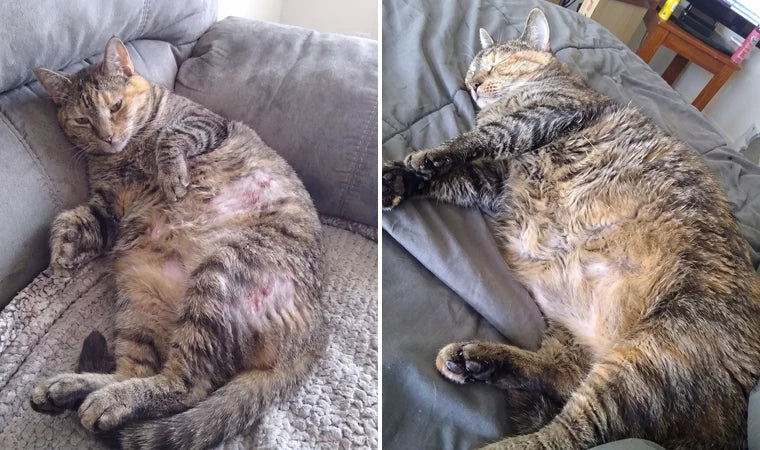
"I wish I had found this two years ago," she wrote back in the forum. "The answer was never behavioral. It was always the gut." She posted a before-and-after photo. Within 48 hours, 200 people had replied asking what she had used.
Every day the Microbiome-GABA Pathway stays disrupted is another day of overgrooming. Another bald patch. Another vet visit that ends the same way. The biology is fixable. The only question is when you start.
90-Day Money-Back Guarantee • Fast US Shipping • Cancel Anytime
* These statements have not been evaluated by the Food and Drug Administration. This product is not intended to diagnose, treat, cure, or prevent any disease. Results may vary. The testimonials above reflect individual experiences and are not guaranteed outcomes. Always consult your veterinarian before introducing new supplements to your cat's routine.